Why your plate needs to change in midlife
I used to think knowing what to eat in midlife was simply about eating less. Then perimenopause arrived and the rules I’d cooked by for years stopped working. My energy dipped, my waistline moved, and my old portions suddenly felt wrong.
Here’s what I learned: midlife isn’t about eating less, it’s about eating smarter. As oestrogen (estrogen) falls, women lose bone density faster and muscle becomes harder to keep. Your plate is one of the best tools you have to push back.
If you haven’t read my story yet, start with Self-Care in Midlife: What Early Menopause Taught Me.
Protein: spread it across the day
Muscle loss speeds up after 50, and low protein and low activity are two of the biggest drivers. A 2023 systematic review in BMC Women’s Health found exercise reliably improves muscle mass and strength in menopausal women, with protein playing a supporting role.
Rather than one big steak at dinner, aim for a palm-sized serve of protein at every meal:
- Breakfast: eggs, Greek yoghurt, or tofu scramble
- Lunch: tinned fish, lentils, or leftover chicken
- Dinner: fish, lean meat, beans or tempeh
Lean poultry is an easy win; my post on turkey for mood, muscles and energy has cooking tips.
Calcium and bone health
In Australia and New Zealand, the recommended calcium intake rises to 1,300 mg a day for women over 50, and the Australian Dietary Guidelines suggest four serves of dairy or alternatives. Recommendations differ by country, so check your local guidelines (the UK’s NHS menopause guide is a good start).
Most of us fall short. The latest national nutrition survey found 3 in 4 Australian women don’t get enough calcium from food, rising to 9 in 10 women aged 50 to 64.
Not a dairy lover? Try calcium-set tofu, tinned salmon or sardines with the bones, almonds, and fortified plant milks. Leafy greens help too, and kale is one of my favourites. Vitamin D helps you absorb calcium, and UV-exposed mushrooms are a rare food source.
For bone-specific guidance, Healthy Bones Australia has free resources.
Fibre (fiber) and plants
Fibre keeps you full, feeds your gut bacteria and supports healthy cholesterol, which matters more after menopause. The World Health Organization recommends at least 400 g of fruit and vegetables a day.
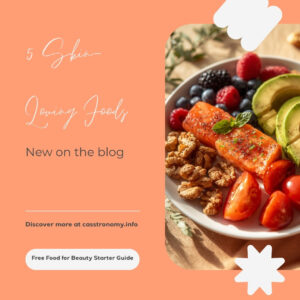
My chef’s rule: fill half your plate with colour. Add whole grains, legumes and nuts, and lean on anti-inflammatory foods like olive oil, oily fish and berries. My post on 5 foods for healthy skin shows how I cook them.
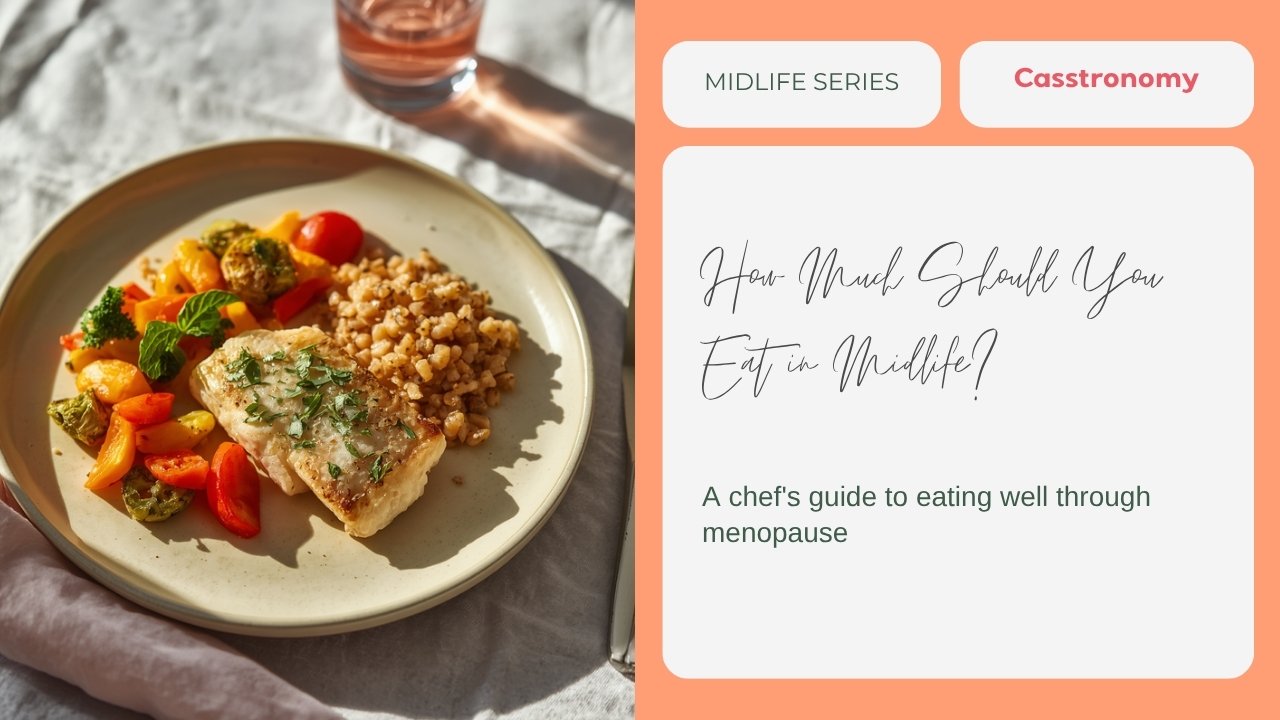
The easy midlife plate
You don’t need to count every gram. Use this simple guide, adapted from Harvard’s Healthy Eating Plate:
| Part of plate | What goes there |
|---|---|
| Half | Vegetables and fruit, as many colours as possible |
| Quarter | Protein: fish, eggs, legumes, tofu, lean meat |
| Quarter | Whole grains or starchy veg: brown rice, oats, quinoa, sweet potato |
| A drizzle | Healthy fats: extra virgin olive oil, avocado, nuts |
Want to understand why your metabolism shifts in midlife? Read my 5 tips to support your metabolism.
Learn it properly in Self Care for Women
Portions and food choices are the very first lessons in Self Care for Women, my self-paced online course you can take from anywhere in the world. In Section 1 you’ll learn how much and what to eat for your body, how to choose the right ingredients, and the cooking methods that keep nutrients on your plate.
Not ready yet? Grab my free e-book of fast-nutrition recipes. Or get my free Food for Beauty Starter Guide, with a skin-loving shopping list and three easy recipes.
Look after yourself, and look after your sisters.
Chef Cass
Frequently asked questions
Do I need to eat less after menopause?
Not necessarily less, but differently. Focus on protein at each meal, plenty of plants, and enough calcium. Your needs depend on your size and activity.
Is dairy the only way to get enough calcium?
No. Calcium-set tofu, tinned fish with bones, almonds, fortified plant milks and leafy greens all contribute.
Should I take supplements?
Talk to your doctor first. Food comes first, and supplements suit some women but not others.
This post is general information only and isn’t a substitute for advice from your own doctor or health professional.