After years in commercial kitchens, here’s what I’ve learnt about eating for your skin: it isn’t about expensive powders or a strict plan. It’s about putting a handful of good, everyday foods on the plate often enough that they become habit.
These are the five foods for healthy skin I cook with every week. None of them are miracle foods. They’re just nourishing, easy to find and, cooked well, genuinely delicious.
In this post:
- 5 foods for healthy skin
- How to put them on a plate
- Your questions answered
- Ready to go further?
- References
5 foods for healthy skin
1. Salmon: omega-3 fats
Oily fish like salmon, sardines and mackerel are one of the best sources of omega-3 fats,1 which your body uses to keep cells, including skin cells, working as they should.
Chef tip: start it skin-side down in a hot pan and don’t move it. Give it 4 to 5 minutes, flip for a minute, then finish with a squeeze of lemon. Crisp skin, tender inside.
2. Berries: vitamin C for collagen
Berries are packed with vitamin C, and your body needs vitamin C to make collagen,2 the protein that gives skin its structure.
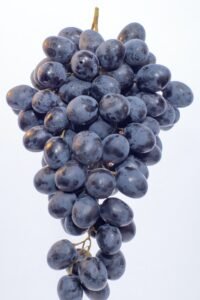
Chef tip: frozen berries are just as nutritious as fresh,3 cheaper, and perfect for breakfasts and smoothies. I always keep a bag in the freezer. If you love fruit for your skin, have a look at my guide to grapes: health benefits, beauty and cooking tips.
3. Avocado: healthy fats and vitamin E
Avocado gives you healthy monounsaturated fats plus vitamin E,4 and it makes almost anything taste better.
Chef tip: a squeeze of lime or lemon slows browning, so half an avocado keeps for the next day.
4. Walnuts: plant-based omega-3
Walnuts are one of the best plant sources of omega-3 fats,1 which makes them a great option if fish isn’t your thing.
Chef tip: toasting brings out a lovely nutty flavour, but keep it gentle. The omega-3 fats in walnuts are delicate, and in one study, roasting walnuts at 170°C for 15 minutes slightly reduced their omega-3 content,5 while their antioxidants held up well. So toast them in a dry pan over low to medium heat for 3 to 4 minutes, just until fragrant. Let them cool, then keep them in an airtight jar in the fridge, because toasted nuts go stale faster. Or enjoy them raw for the full omega-3 benefit.
5. Tomatoes: lycopene
Tomatoes are rich in lycopene, and here’s the kitchen secret: your body absorbs more of it when tomatoes are cooked with a little olive oil.6
Chef tip: slow-roast a tray of cherry tomatoes with olive oil on Sunday and use them all week, on toast, in pasta or next to eggs.
How to put them on a plate
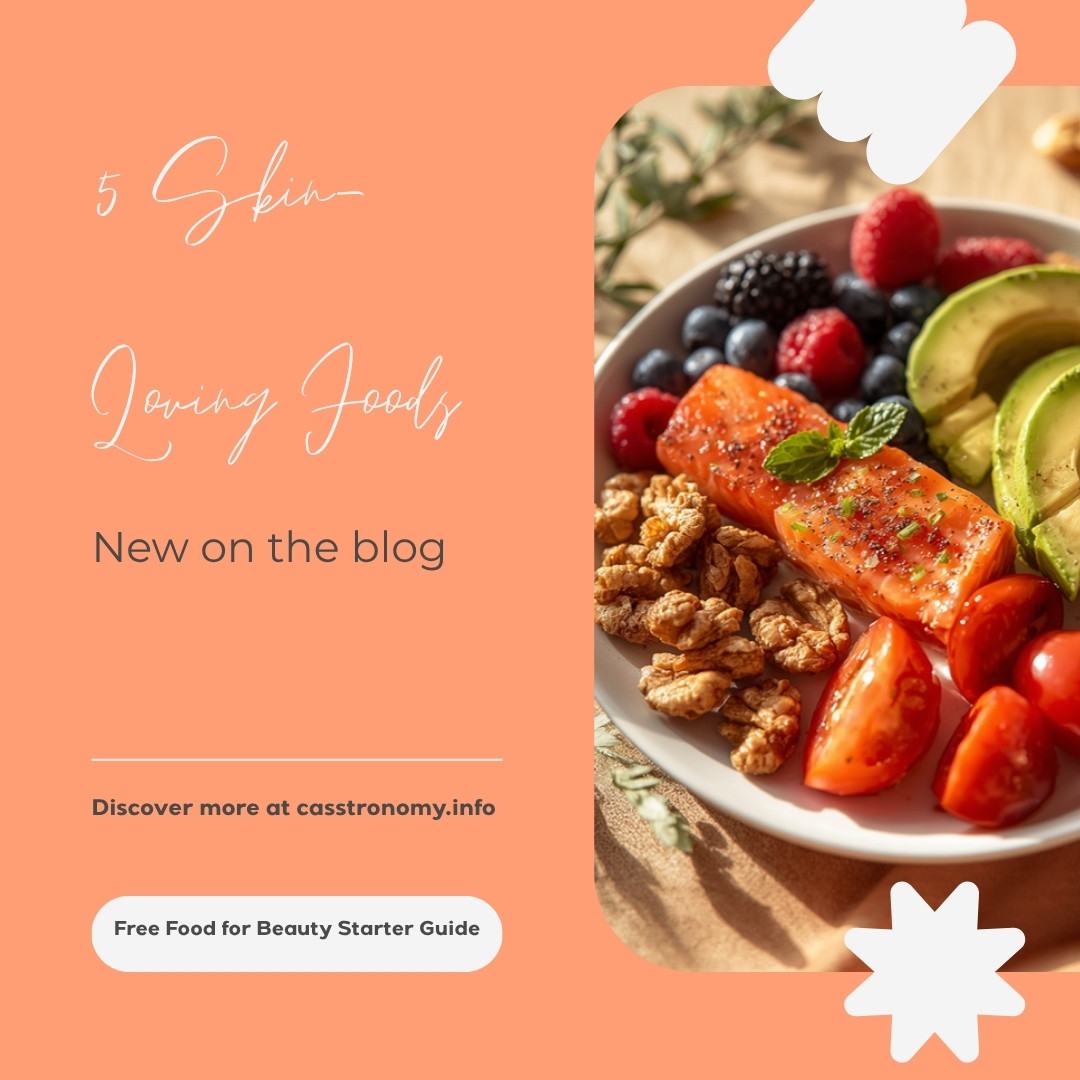
Want to try three of these at once? My Salmon & Roasted Tomato Traybake is one tray, 25 minutes and very little washing up. It’s in my free Food for Beauty Starter Guide, along with a skin-loving shopping list and two more easy recipes.
Consistency over perfection. Pick one food this week and go from there. For more on eating for your skin, including acne, eczema and collagen, read Elevate Your Skin: Nutrition and Self-Care Tips.
Your questions answered
What foods are good for healthy skin?
A varied diet with oily fish, nuts, berries, avocado and tomatoes is a great start. Between them, they give you omega-3 fats, vitamin C, vitamin E, healthy monounsaturated fats and lycopene. No single food works alone, so aim for variety and regular habits.
Are frozen berries as healthy as fresh?
Yes. Research comparing fresh, fresh-stored and frozen produce found frozen was generally just as nutritious, and sometimes more so than fresh produce that had been sitting in the fridge for a few days.3
Does toasting walnuts destroy the omega-3?
No, but high heat can reduce it slightly. Toast walnuts gently for a few minutes, or eat them raw, and store them in an airtight jar in the fridge.5
Is lycopene better from cooked or raw tomatoes?
Both are good for you, but cooking tomatoes with a little olive oil helps your body absorb more lycopene.6
Can food replace skincare or medical treatment?
No. Good food supports healthy skin, but it isn’t a treatment. If you have a skin condition, talk to your GP or a dermatologist.
Ready to go further?
If you’d like to turn these habits into a routine, my Self-Care for Women program is a practical, 12-week self-paced course built around one simple idea: real wellness starts with what’s on your plate. You’ll learn to nourish your body, cook with confidence, stretch your food budget and coach yourself to lasting change, in bite-sized lessons that fit around your life.
References
- British Dietetic Association. Omega-3: Food Fact Sheet. bda.uk.com/foodfacts/omega-3
- Pullar JM, Carr AC, Vissers MCM. The roles of vitamin C in skin health. Nutrients. 2017;9(8):866. PMC5579659
- Li L, Pegg RB, Eitenmiller RR, Chun JY, Kerrihard AL. Selected nutrient analyses of fresh, fresh-stored, and frozen fruits and vegetables. Journal of Food Composition and Analysis. 2017;59:8–17. doi:10.1016/j.jfca.2017.02.002
- Dreher ML, Davenport AJ. Hass avocado composition and potential health effects. Critical Reviews in Food Science and Nutrition. 2013;53(7):738–750. PMC3664913
- Kulik K, Waszkiewicz-Robak B. The effect of roasting on the health-promoting components of nuts determined on the basis of fatty acids, polyphenol compounds, and antioxidant capacity. Molecules. 2025;30(23):4594. PMC12693215
- Fielding JM, Li D, Stockmann R, Sinclair AJ. Lycopene concentration and antioxidant capacity after consuming tomatoes with olive oil. Asia Pacific Journal of Clinical Nutrition. 2001;10(Suppl):S80. apjcn.qdu.edu.cn
This post is general information, not medical advice. If you have allergies or a health condition, check with your doctor or dietitian.