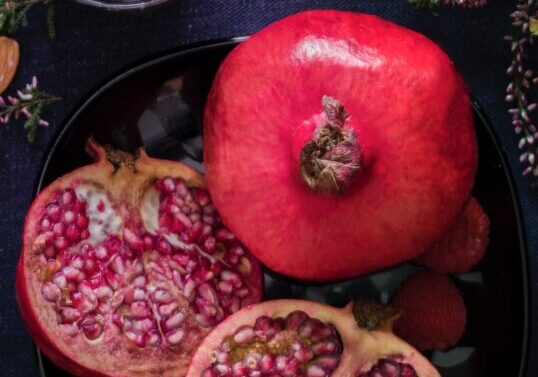
Pomegranates: health benefits, beauty and cooking tips
Pomegranates are thick-skinned dazzling red beauties. They are brimming with Vitamin A, Vitamin C, Vitamin E, Vitamin K, calcium, ellagic acid, folic acid, magnesium, manganese, niacin, phosphorous, phytochemicals, polyphenols, punicalagins, potassium, riboflavin, thiamin and zinc.
These historically revered fruits are rich in polyphenols called punicalagins, along with vitamin C, vitamin K, folate, potassium and fibre. Here is what they bring to a balanced diet:
Antioxidants- Pomegranates are one of the richest fruit sources of polyphenol antioxidants, which help protect your cells from everyday oxidative stress. Research into their wider health effects is promising but still mostly in early stages.
Heart health- Some small studies suggest pomegranate juice may modestly lower blood pressure, and the fruit’s potassium and fibre support a healthy heart as part of a balanced diet.
Anti-inflammatory compounds- Pomegranate polyphenols have anti-inflammatory effects in laboratory studies, which is one reason researchers are interested in them for joint and heart health.
Digestion- The seeds (arils) are a good source of fibre, which supports regular, healthy digestion.
Immune health- Vitamin C contributes to the normal function of your immune system.
Blood sugar- Whole pomegranate seeds are a better choice than juice if you are watching your blood sugar. The juice still contains natural sugars, so keep portions small and talk to your diabetes educator or dietitian.
Pregnancy- Pomegranates provide folate, one of the nutrients needed in pregnancy, alongside the folic acid supplement your doctor will recommend.
Medication note- Pomegranate juice may interact with some medications, including blood thinners such as warfarin. If you take regular medication, check with your doctor or pharmacist before drinking it daily.
For more on Women’s health join our online program here
Beauty
Antioxidant properties- The vitamin C in pomegranates is needed to make collagen, which keeps skin firm and supports healthy hair and nails.
Skin health- Pomegranate polyphenols are being studied for their ability to help protect skin from sun damage, but they are a bonus, not a replacement for sunscreen! Pomegranate extract is also a popular ingredient in skincare for its soothing, antioxidant qualities.
Join Chef Cass and Dr Sandy’s upcoming Beauty and Food workshop here.
Weight management
Fibre- A cup of juicy pomegranate seeds contains around 7 grams of fibre. As a snack, they will keep you feeling fuller for longer and less likely to reach for empty calories.
Cooking / Consumption
Pomegranates are fantastic in salads, yoghurt and sorbet. Mix the seeds through vegetable dishes and curries to finish for colour, texture and zing.
Marinate Meats-in the juice or pomegranate molasses, grill or just eat raw, naturally sublime.
A Beautiful Breakfast salad addition-add chopped smoked eggplant, cauliflower, baby spinach leaves.
A wonderful compliment to your Sunday morning Rye French Toast with coconut labna and pomegranate seeds, finish with this pomegranate syrup- It is oh so easy to make. All you need to do is combine 12 cups of pomegranate juice, 1.5 cups of honey and 3 tablespoons of fresh lemon juice in a saucepan over medium heat until the honey is completely dissolved. Turn the mixture down to medium-low and allow it to reduce into syrup for about 50 minutes or so. Let the syrup cool for a good half an hour and pour into pretty glass jars.
Want more cooking tips?
Search more blogs here or join Cass’s kitchen and nutrition coaching here.
Interesting fact about pomegranates
“The pomegranate is one of the world’s oldest fruits and some scholars believe that it was actually the pomegranate, not the apple, which tempted Eve in the Garden of Eden.”
This article is general information about food and wellbeing, not medical advice. Please talk to your GP or a qualified health professional about any health condition, medication or major change to your diet.